Physical Address
304 North Cardinal St.
Dorchester Center, MA 02124
Physical Address
304 North Cardinal St.
Dorchester Center, MA 02124

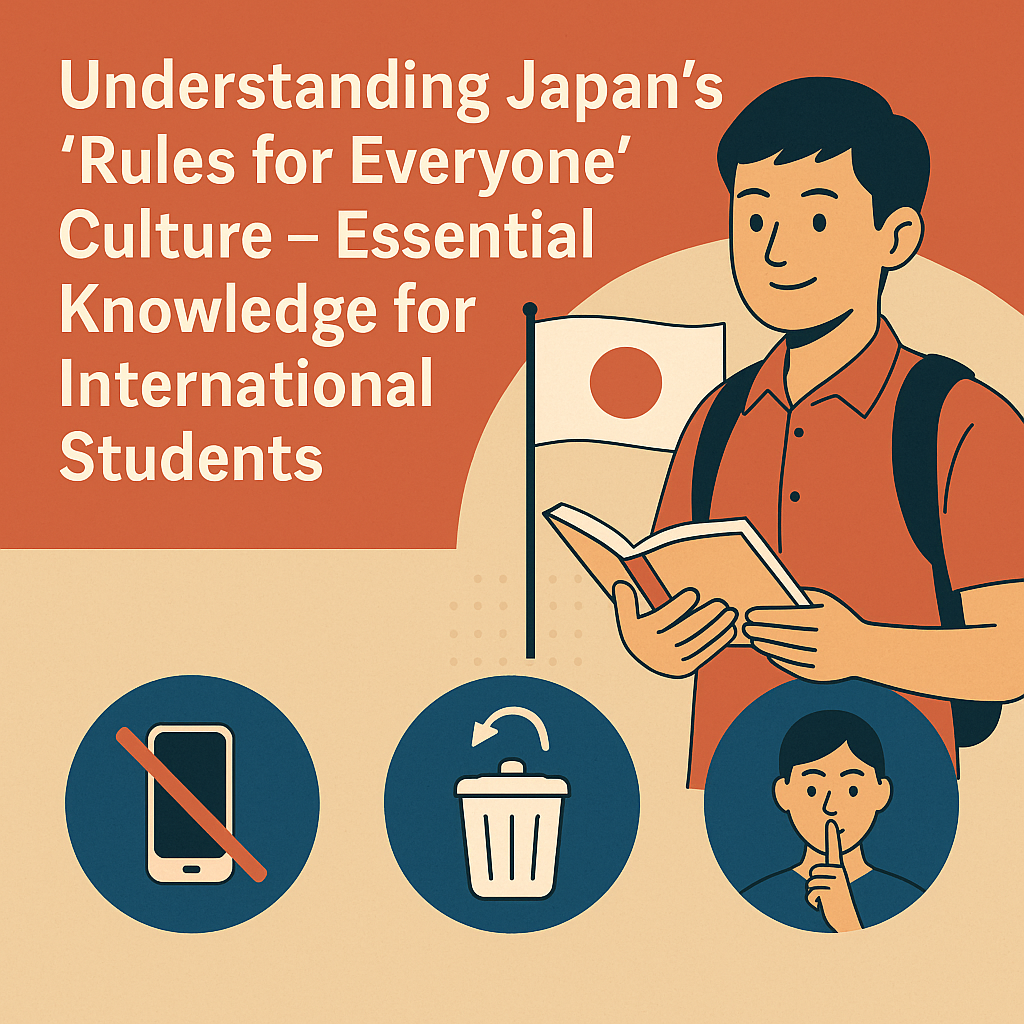
One of the first things you may notice when studying in Japan is the surprising number of “rules.” Using mobile phones on trains, the detailed system of separating trash, being mindful of noise in quiet residential areas—these are behaviors you might not have thought twice about in your home country, but in Japan, they are seen as important manners.
These rules are not designed to make life difficult for international students. In fact, they are deeply connected to Japan’s unique cultural background. This article introduces the scientific basis for Japan’s cultural characteristics and provides essential knowledge to help you enjoy a more fulfilling study abroad experience.
A large-scale study conducted by Professor Michele Gelfand of Stanford University and colleagues across 33 countries scientifically demonstrated that Japan is a country with high “cultural tightness.” This research measured the strength of social norms in each country and the level of tolerance toward those who deviate from them.
Japan is classified as a “tight culture,” alongside countries such as Austria, Germany, and Singapore. This does not mean simply having more laws; rather, it reflects a strong set of shared expectations and norms in society, with significant social pressure against deviating from them.
In contrast, countries like New Zealand, the Netherlands, and the United States are categorized as “loose cultures,” which tend to accept greater diversity in individual behavior. This scientific foundation confirms that the impression many international students have of Japan as “highly rule-oriented” is not just personal perception but a real cultural trait.
The Japanese idea of “not causing trouble to others” is deeply ingrained in daily life. Understanding how this principle affects real-world behavior is key to a successful study abroad experience.
Take public transportation as an example: many Japanese people avoid loud conversations on trains. While not a legal requirement, this behavior is an established courtesy in crowded, shared spaces. Similarly, people often refrain from making loud noises in residential areas late at night or early in the morning, out of consideration for their neighbors.
In part-time jobs, workers are often expected to help colleagues even after finishing their own tasks, or to prepare for the next shift to ensure a smooth handover. These are not written rules, but they strongly influence workplace evaluations and relationships.
At university, in group work, listening to others and contributing in a way that maintains overall balance is often valued more highly than speaking out aggressively.
To understand the concept of wa (harmony), it is useful to know its historical roots. The Seventeen-Article Constitution of Prince Shōtoku (604 CE) begins with the phrase “Harmony should be valued,” a principle that remains deeply embedded in Japanese society.
In everyday student life, this emphasis on wa appears in many ways. In seminars or research groups, hierarchical relationships with professors and senior students are respected, and expressing opinions requires careful attention to wording and tone. In part-time jobs, teamwork is valued more than individual achievements.
In housing situations, maintaining good relations with neighbors means being mindful of noise and how shared spaces are used. While not legal obligations, these behaviors are crucial for building long-term relationships.
What matters most in real life are the unwritten social expectations. These vary by region and context, but some common patterns include:
Arriving exactly on time is the minimum standard; being five minutes early is often seen as ideal. This ties into Japan’s culture of punctual public transportation, where tolerance for lateness is lower than in many other countries.
Direct refusals or criticism are often avoided. Instead, indirect expressions such as “It might be difficult” or “I’ll think about it” may serve as polite ways of saying no.
It is important to leave public spaces as clean—or cleaner—than you found them. In libraries, cafeterias, or shared kitchens, restoring the space to its original condition is considered good manners.
Adapting to these cultural traits is most effective when done step by step. First, take time to observe. Carefully watching how Japanese people behave helps you understand the reasoning behind their actions, making your adaptation more natural and meaningful.
Next, build relationships with trusted Japanese friends or university staff so you have people you can openly ask questions. Many Japanese people are eager to support international students and will happily explain the reasoning behind social expectations.
It is also important not to fall into perfectionism. Cultural adaptation is a gradual process, and you don’t need to master everything at once. What matters is maintaining curiosity, learning continuously, and participating actively without fear of small mistakes.
Finally, remember that your own cultural background is a valuable asset. By bringing your unique perspective as an international student, you can contribute new value to Japanese society. Understanding Japan’s cultural tightness while maintaining your own identity will help you create a richer, more rewarding study abroad experience.